
FEATURE
Accelerating the diagnosis of prostate cancer
The support of The John Black Charitable Foundation is providing the basis for clinicians to diagnose prostate cancer faster, positively impacting millions of men across the world.

UK statistics: Prostate Cancer UK
Prostate cancer is the most common cancer in men, with around 56,000 diagnoses and 12,000 deaths each year in the UK alone. Globally, four million MRI scans are currently needed each year to diagnose the disease. With a surge in prostate cancer cases predicted, this demand is set to rise rapidly.
A major breakthrough for prostate cancer diagnosis
The PRIME trial launched in 2022, funded by philanthropic support from The John Black Charitable Foundation and a research grant from Prostate Cancer UK.
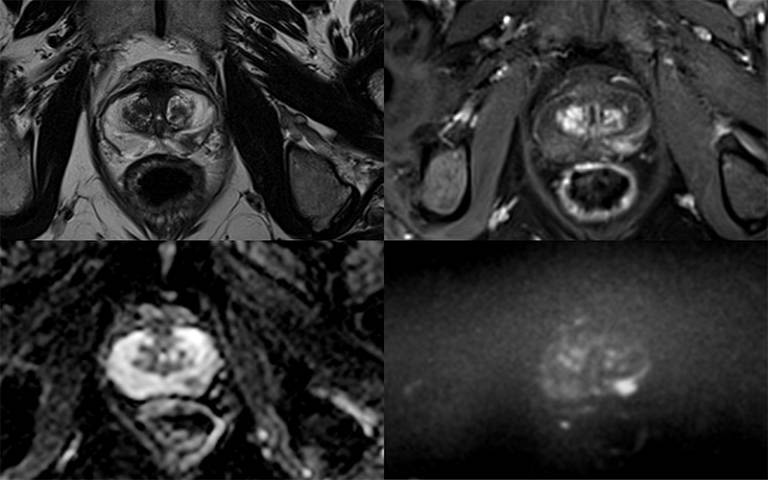
Led by chief investigator Professor Veeru Kasivisvanathan (UCL Surgery and Interventional Science), clinical trials took place at 22 healthcare settings in 12 countries. The focus of the study was to improve the way prostate cancer is diagnosed using imaging. This year, the results of the trial concluded that a two-part MRI scan – without the need to inject dye and have a doctor present – is just as effective at diagnosing prostate cancer as the three-part MRI scans traditionally used.
Clinical trials took place at 22 healthcare settings in 12 countries
The total scanning time needed is halved to just 15-20 minutes
Improvements could enable the doubling of global capacity for prostate cancer MRI scanning – potentially reaching eight million patients a year
Halving the total scanning time needed to just 15-20 minutes, this medical breakthrough has the potential to radically improve patient outcomes. In clinical settings, a combination of shorter procedure times, reduced costs, and lessened staffing requirements are factors that could enable the doubling of global capacity for prostate cancer MRI scanning – potentially reaching eight million patients a year.
Increasing impact with AI and philanthropy
In leading the transformation of clinical practice, the PRIME trial marks a major step forward. But as this breakthrough will result in a sharp increase in the number of scan images created, researchers are now looking towards strengthening capacity to interpret them.
This led to The John Black Charitable Foundation making a further donation to establish the three-year PARADIGM trial grant (Prostate MRI Analysis by Radiologists and AI – Disease Identification and Guided Management), which began in 2025. This trial will explore whether AI can accurately detect prostate cancer from MRI scan images.
PARADIGM is the first multi-centre study evaluating AI against expert radiologists in prostate cancer detection. This will also be the first time AI is used in a patient pathway, instead of training AI on existing images first. This will allow researchers to make faster progress.
“Philanthropic funders recognise the potential of novel, game-changing ideas, and this makes our relationship with The John Black Charitable Foundation very special,” Professor Kasivisvanathan said. “Studies via other funding routes can take years to set up and traditional funders may be less likely to fund practice-changing ideas, with a preference for more incremental changes.
In a competitive research landscape, it is often difficult for researchers to gain bespoke funding to undertake studies on an international scale – something that Professor Kasivisvanathan also feels strongly about.
“Multi-centre studies with a variety of global populations bring results that are significantly more impactful, because you can show generalisability across different settings. It means you can change clinical guidelines not just in a local context, but around the world.”
Philanthropy is powering the future of medicine
UCL has a distinct record of innovation in the approach to prostate cancer diagnosis. MRI scans themselves were only introduced to the diagnostic pathway in the last decade, partly resulting from UCL research that was itself enabled by philanthropy.
The John Black Charitable Foundation – a significant funder in the prostate cancer research landscape – has enabled numerous research programmes at UCL and also established The John Black Charitable Foundation Endowed Chair in Urological Cancer Research held by Professor Gert Attard, Director of the UCL Cancer Institute. Their support is now driving further improvements in diagnostic accuracy, efficiency, and access for patients.
“It is a pleasure to support cutting-edge research at a world class institution such as UCL, and in Veeru we have an academic lead at the very forefront of the science around this urgent health crisis,” said David Taglight, Chairman of The John Black Charitable Foundation. “That we are now seeing such promising results in improved diagnosis of prostate cancer is testament to the quality of the research projects his team undertake on behalf of all those affected by this devastating disease.”
With rapidly-evolving potential to improve patient outcomes, change clinical practice, and implement innovations that make a difference at each stage of treatment and care, research like this – powered by philanthropic giving – has a unique ability to save and change lives.
Philanthropy is powering the future of medicine
UCL has a distinct record of innovation in the approach to prostate cancer diagnosis. MRI scans themselves were only introduced to the diagnostic pathway in the last decade, partly resulting from UCL research that was itself enabled by philanthropy.
The John Black Charitable Foundation – a significant funder in the prostate cancer research landscape – has enabled numerous research programmes at UCL and also established The John Black Charitable Foundation Endowed Chair in Urological Cancer Research held by Professor Gert Attard, Director of the UCL Cancer Institute. Their support is now driving further improvements in diagnostic accuracy, efficiency, and access for patients.
“It is a pleasure to support cutting-edge research at a world class institution such as UCL, and in Veeru we have an academic lead at the very forefront of the science around this urgent health crisis,” said David Taglight, Chairman of The John Black Charitable Foundation. “That we are now seeing such promising results in improved diagnosis of prostate cancer is testament to the quality of the research projects his team undertake on behalf of all those affected by this devastating disease.”
With rapidly-evolving potential to improve patient outcomes, change clinical practice, and implement innovations that make a difference at each stage of treatment and care, research like this – powered by philanthropic giving – has a unique ability to save and change lives.
 Built with Shorthand